
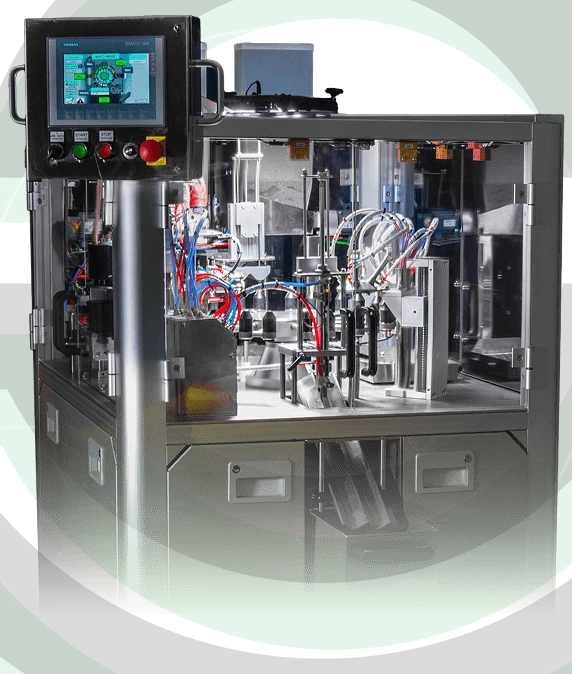
The AuraX that replaced four hand-rollers with one operator.
Before automating, Rare Michigan Genetics ran preroll production with four team members by hand, producing about 2,500 prerolls a shift. Output varied with whoever was rolling that day, and the operation was struggling to keep up with retail deadlines. After installing AuraX, one operator now runs 6,000 to 8,000 prerolls a shift.
The math that made the decision easy
Jay VanderLaan, who runs Rare Michigan Genetics in Kalamazoo, put the result in his own terms: "So I'm getting three times what I was getting before and I've reduced my labor by 75 percent, which more than pays for the machine on a monthly basis." That is the whole case in one sentence: the labor savings alone cover the machine's cost every month, before counting the extra output.
"So I'm getting three times what I was getting before and I've reduced my labor by 75 percent, which more than pays for the machine on a monthly basis."
Jay VanderLaan, Rare Michigan Genetics, Kalamazoo, MichiganConsistency was the other problem automation solved
Hand-rolling at four people meant four different rolling speeds and four slightly different results. VanderLaan describes the AuraX output as "perfect, rivaling hand-rolled if not better," using the machine's Dutch Crown Fold finish, the same fold used across the AuraX line for infused and sticky material.
What support looked like after installation
Rare Michigan Genetics is a smaller operation than Copperstate Farms, which makes its support experience a useful data point for smaller producers specifically: replacement parts arriving within 24 hours, and the machine back online within 10 minutes of a part swap. VanderLaan is now considering a newer AuraX model built to run multiple preroll sizes off one paper size, to cut material costs and changeover labor further.
Want the full evaluation framework this result maps to? Read the preroll automation buyer's guide, or see the labor math directly in the labor cost savings guide.