
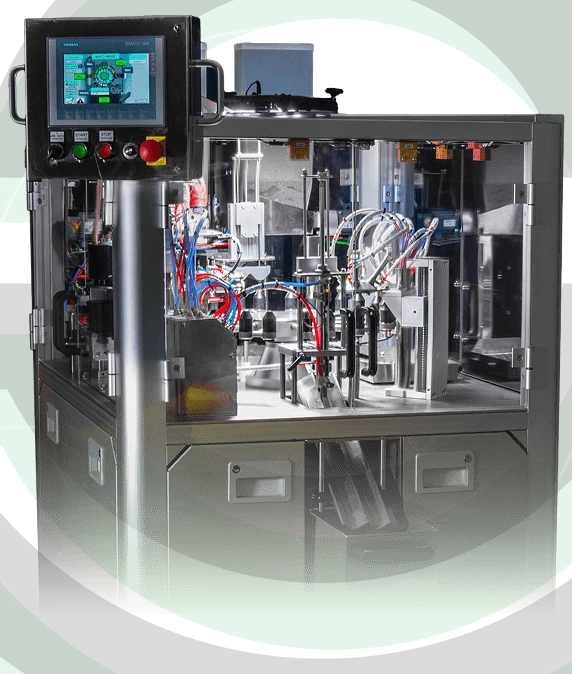
AuraX, the Hefestus flagship.
Most preroll automation research starts with a spec sheet: prerolls per hour, machine footprint, price. Those numbers matter, but they answer the wrong first question. The right first question is what is actually slowing your line down today, a rolling bottleneck, a labor cost that scales with every new SKU, an inconsistent fill rate, or a compliance step that eats a shift. The machine that fixes your specific bottleneck is rarely the one with the biggest headline throughput number.
Five things to measure before you automate
1. Throughput per operator, not throughput alone
A machine rated at a high hourly output still needs to be judged against how many people it takes to run it. AuraX runs up to 2,000 prerolls an hour with a single operator, which is the number that actually determines your labor cost per unit, not the raw throughput figure by itself. LumineX, the compact line, runs up to roughly 600 an hour in a four by four foot footprint, built for smaller floors where a full-scale install does not make sense yet.
2. How much labor the line actually removes
Automation is usually justified on labor savings, so measure it directly: AuraX is built to run with a single operator and cuts labor by up to 90% compared to manual rolling, without reducing output. That is the number to hold every vendor's claim against, not a generic "saves labor" line.
3. Whether it handles your actual material
Infused and sticky material jams a lot of conventional rolling equipment. AuraX and LumineX use the patented Dutch Crown fold specifically to handle infused and sticky product without the jam rate that pushes producers back to a manual line for their specialty SKUs. If a vendor's demo only ever runs dry flower, ask to see infused material run at rate before you assume it will work on yours.
4. What happens to material prep upstream of the roller
The rolling machine gets the attention, but material prep determines the terpene profile and consistency of everything that follows it. The TerpPreserve Grinder uses a low-heat sift built to protect terpenes during grinding, in two throughput models (PSC-8 at 165 lb/hour, PSC-10 at 330 lb/hour) sized to different line volumes. A rolling machine is only as consistent as the material going into it.
5. What compliance looks like on the line, not on paper
Underfilled or overweight units are a common regulatory problem, and catching them manually costs labor and still lets some through. The AuraX Weight Checker automatically rejects out-of-spec units before they ship, so compliance is a property of the line itself rather than a separate manual inspection step.
On price: configuration, volume, and which machine fits your line all change the number, and financing options are available. There is no honest single figure to quote here without knowing your line, which is why every product page on this site ends in a quote request rather than a sticker price.
Evaluate with your own material, not a vendor's
The single biggest source of buyer's remorse in this category is a demo run on the vendor's own sample material instead of yours. Switching an active line carries real operational risk, so start with a live online demo on your own numbers, and where it's possible, follow it with a hands-on session so your own reject rate is visible before you commit any capital. That is the whole premise behind a trial-based demo instead of a canned sales walkthrough.
A real example
Seed & Smith in Denver, Colorado scaled daily output from 1,200 to 1,500 prerolls to well past 10,000, cut their rolling crew to two people, consolidated their cone SKUs from three or more down to one, and expanded into infused SKUs, all with zero downtime since installation. That is the kind of outcome the five measurements above are meant to help you evaluate against your own numbers, not just Seed & Smith's.
Have a narrower question? The preroll automation FAQ covers cost, compliance, and demo logistics directly.