
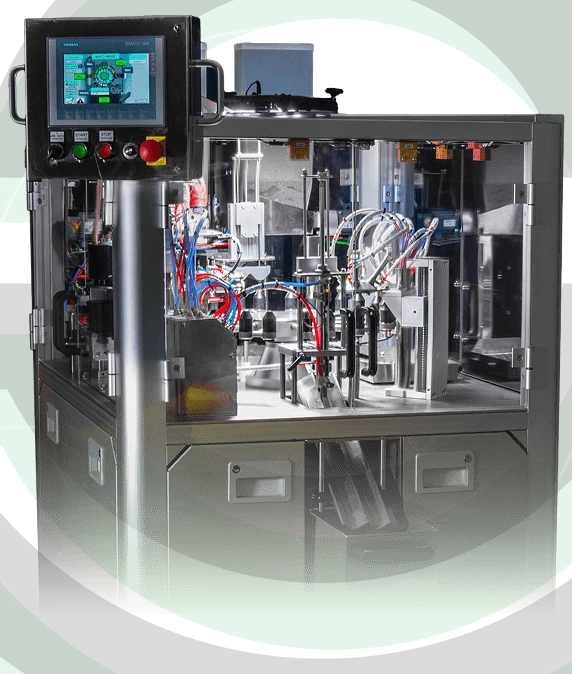
The AuraX line: Forbidden Farms bought a second one after the first.
Taylor Balduff of Forbidden Farms had been rolling by hand with spring-loaded hand boxes, at roughly 100 to 120 joints an hour per operator. After bringing in a Hefestus machine (the original Aura, purchased in 2017) set to one-gram prerolls, that number moved to 1,000 to 1,100 an hour. By the time of the 2024 interview, the operation had rolled an estimated 4 million prerolls on that first machine, and had since purchased a second, an AuraX.
The cost-per-preroll math, worked out
Balduff's own numbers reduce to a simple per-unit cost: at $20 an hour for an operator rolling 100 to 120 by hand, labor runs about $0.20 per preroll. At 1,000 to 1,100 an hour on the machine, the same $20-an-hour operator labor cost drops to about $0.02 per preroll, a 90% reduction Balduff cited directly.
"It doesn't break. We're not constantly having to work on it, and there's not a bunch of parts to lube."
 Taylor Balduff, Forbidden Farms, Washington State, in a 2024 interview
Why the second machine is the real signal
Labor savings on paper are one thing. Buying a second machine after years of runtime on the first is a different kind of evidence, it is what an operator does with their own capital once they already know exactly what the equipment costs to run and maintain, not what a vendor promises before the sale.
A note on timing: this case study documents a real result from 2024. It is presented here as a factual account of that outcome, not a claim about any current relationship.
Want the fuller framework this maps to? Read the labor cost savings guide, or see what else to measure before you commit capital.