
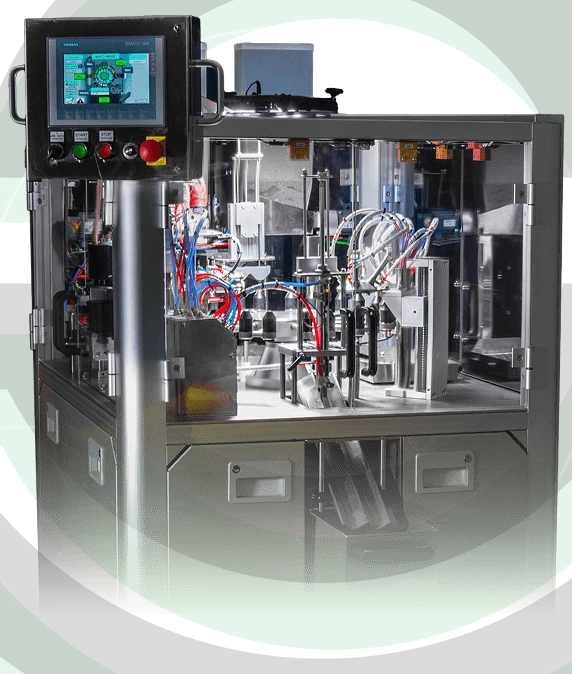
The Hefestus AuraX, the machine behind the numbers below.
The spec sheet isn't the real question
Every automation vendor's page reads the same way: throughput per minute, footprint, power draw. Useful numbers. Not the ones that actually decide whether a line switches vendors.
The real question a Director of Operations asks isn't "what's the peak throughput." It's: will this hold up at your volume, with your product, run by your crew, day after day, without the machine becoming a second full-time job.
One real, structural difference is worth naming plainly. The Blackbird builds prerolls from raw bobbin paper through its own compaction process, not from pre-formed cones. That means the format is tied to that one paper system. AuraX is cone and paper-agnostic: any brand, size, or tip you already run. If your product line depends on a specific cone, that's a fair question to ask before you commit to either machine, not something either vendor's marketing page will ask for you.
On the Blackbird's specs: we won't publish a fabricated spec-for-spec table here. If you want its current numbers, ask the vendor directly, specs change and we'd rather you have the real ones than something we guessed at. What we can show you is proof.
| Specification | Hefestus AuraX | RollPros Blackbird |
|---|---|---|
| Throughput | Up to 2,000 prerolls / hour | Not independently verified |
| Operators required | One | Not independently verified |
| Labor reduction | Up to 90% | Not independently verified |
| Infused and sticky material | Handled | Not independently verified |
| Formats | Cones, straight rolls, blunt wraps | Not independently verified |
| Tip compatibility | Glass, ceramic, wood | Not independently verified |
| Proof available before purchase | Trial on your own product and line | Not independently verified |
What we can actually prove
Seed & Smith, a vertically integrated operation in Denver, went from 1,200 to 1,500 prerolls a day to 10,000 to 15,000 or more, on the same crew size, cut down to 2 people. Cone SKUs consolidated from three or more down to one. Zero downtime since installation.
Their words, not ours: "We're producing more, at a higher quality, and with less stress across the board." And on what actually mattered once the machine was running: "This machine paid for itself quickly. And the support? That's 80% of the value."
That's the part most comparisons skip. The machine is half the decision. Who answers the phone when a run doesn't look right at 2am is the other half. We didn't find a documented trial-before-purchase process for the Blackbird in our own research, so if that matters to you, it's worth asking about directly.
Why "book a demo" isn't good enough, for either of us
A demo shows you a machine running someone else's product, in someone else's facility. It tells you the machine works. It does not tell you it works for you.
Before you commit to Hefestus AuraX, or to anyone, we'll trial the machine on your own production line, with your own product. No guesswork, no borrowed sample material standing in for the real thing.
Where a RollPros Blackbird might genuinely be the right call
If you're already committed to a single paper bobbin format and it fits your product line, a machine purpose-built around that format can be the more sensible buy. We'd rather say that directly than pretend one machine fits every operation. AuraX is built for producers who need to stay flexible across cone brands, sizes, and tips, not locked to one paper system.
If you're evaluating both, here's the honest next step
Don't take either vendor's word for it. Run the trial on your own line, with your own product, and let the output decide it for you.
Have a narrower question first? The preroll automation FAQ covers cost, compliance, and demo logistics directly.